
The Shape of Silence
A Meditation on Iceland’s Hidden Emotional History
In The Shape of Silence, Alda Sigmundsdóttir traces the suppressed emotional history of Iceland through three generations of her maternal lineage—her great-grandmother Þórdís, her grandmother Elínborg, and her mother. A work of literary nonfiction that braids memoir with social history, it asks what becomes of a people who learned, over centuries of poverty and systemic control, not to feel.
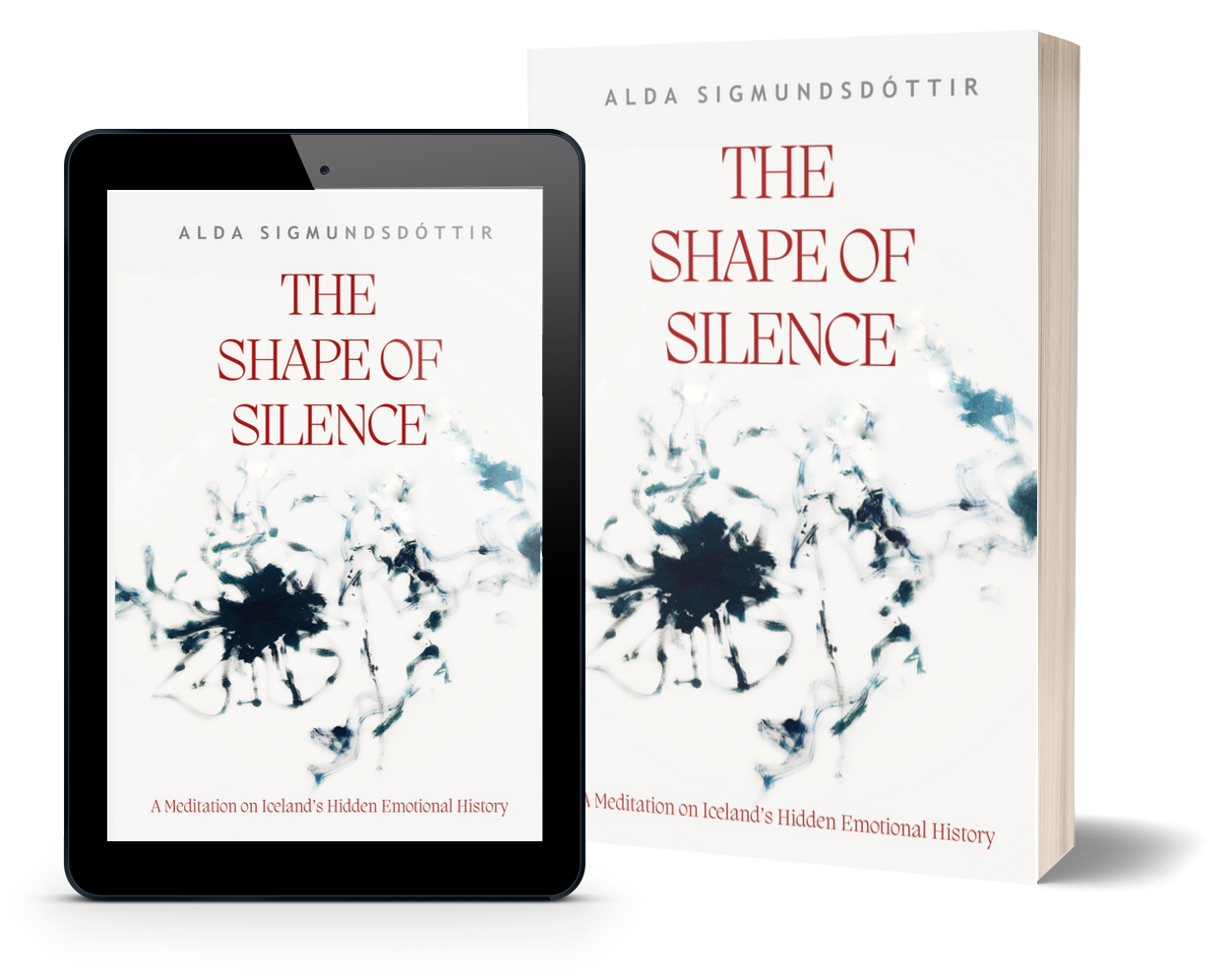
Throughout The Shape of Silence, Alda Sigmundsdóttir returns to the image of a glass wall that forms between people who have been through too much and learned to show too little. You can see the person on the other side, but you cannot reach them, and they cannot reach you. The book is an attempt to see that wall clearly, and to understand how it came to stand there.
The particulars are Icelandic, but the pattern is familiar wherever ordinary people have lived for generations under hardship and under systems that demanded silence. Its questions belong to anyone whose family has carried something it could not put into words.
Sample chapter
Chapter One
The Unsaid
In Icelandic, there is a word that used to carry enormous stigma: niðursetningur (plural niðursetningar). Literally, it means someone who has been “set down,” placed somewhere as a dependent of the district because they could not support themselves. The niðursetningar were the poorest of the poor: the elderly, the disabled, orphaned children, or children from impoverished families.
Until 1907, when circumstances forced people into niðursetningur status, they were auctioned off through so-called fátækrauppboð, “pauper auctions.” The district paid a stipend for each niðursetningur it placed, and whoever was willing to take them for the lowest stipend was typically granted custody.
The term carried a widespread implication that these people were freeloaders and that their predicament was somehow their fault, a defect of character rather than the result of a system stacked against them. They were the lowest rung in the hierarchy, and in a society rife with shame and abuse they were easy targets for other people’s anger and frustration. Consequently, they were often treated with contempt, and sometimes cruelly. In a country where scarcity was the norm for centuries, the niðursetningar were usually the first to go without, food included. The shame attached to this status was so deep that many families who had niðursetningar in their lineage never spoke of it, even generations later—and still don’t.
My own grandmother Elínborg grew up at the edge of this system. When her father drowned, leaving my great-grandmother Þórdís with four children under the age of six, the local authorities in Húnavatnssýsla decreed that the household must be dissolved and the children sent to other homes. This was the default procedure at the time—dissolving families, as though the need for love, continuity and bonding were immaterial. The authorities did not ask whether Þórdís could continue running the farm with assistance, which would have allowed her to keep her children. Instead, all her worldly possessions were auctioned off, and three of her four children were dispersed to other households. She was allowed to choose one to keep with her. She chose the eldest, Þuríður Guðrún, who mostly went by her second name, Guðrún. She was five at the time, and Þórdís likely chose her because she could be of use. After all, my great-grandmother needed to find work as a laborer, and no farmer was going to take in a woman with a child in tow, unless that child could be put to work.
My grandmother, meanwhile, aged two, was sent to live at a farm called Oddsstaðir. I do not know the specific details of her placement, only that she was not formally a niðursetningur, meaning she was not auctioned off. Her status was that of tökubarn, a privately fostered child whose mother was expected to pay for her keep. The distinction mattered legally, but in daily life the line between the two was blurry. Maintenance fees accumulated as a debt my great-grandmother struggled to pay, and I do not know whether she was ever able to clear it. She spent the rest of her life in poverty.
I knew nothing of this when I was growing up. My great-grandmother Þórdís died when I was nine years old, yet I never met her, and I don’t recall anyone ever speaking of her. I don’t believe my relatives were deliberately keeping her story from me, or that anyone was consciously ashamed of what had happened. The silence, I think, had more to do with the numbness and spiritual apathy that grew in its wake.
When my mother was a young woman, she left me, at six months old, to work away for a summer, placing me in the care of my father and my paternal grandmother. She and my father were saving for a home, and she later said that everyone thought it a good idea for her to go, since she would be able to earn well. I recall her once describing the separation as painful—and yet she went. She would leave me again when I was sixteen, that time permanently.
I wonder now whether she was already numb to her own feelings the first time, or whether the template for mother-daughter separation was so deeply laid in her lineage that leaving a child who needed her seemed a perfectly normal thing to do.
*
I often think about how people, and families, make a silent pact not to talk about certain things, even when it destroys their chances for growth and connection. And how, when one person decides to stop honoring that pact, they become the problem, rather than the dysfunctional system in which they were raised.
Silence in families is an agreement, usually unspoken, that certain things will not be discussed. We do this for various reasons: to preserve illusions, to protect people we love, to keep the peace, and, not least, to avoid pain. Yet when things that need to be aired are never discussed, a festering sore develops. Everything that must stay unspoken—grief, anger, shame, terror—grows toxic and unmanageable over time, and keeping it contained becomes more and more costly.
When someone finally voices the truth that everyone has been avoiding, the reaction can be ferocious. Out rushes all that suppressed energy, in an explosion that threatens to bring the whole structure down. If that happened, everyone would have to face the truth, and the prospect is so overwhelming that they scramble to hold things together instead. Usually they do this by ostracizing the person who spoke out. That person is labeled the troublemaker, the ungrateful one who stirs up the past for no good reason. The one trying to break the chain of dysfunction winds up as the scapegoat for the entire family—and the same dynamic can play out across a whole society.
Vistarband
Working for someone else was compulsory for centuries.
A nation of tenants
Around 1700, 96 percent of farmers didn’t own the land they worked,
Working for nothing
Female laborers typically received no wages beyond their keep.
The price of help
Accept poor relief and lose your vote, a rule that lasted until 1934.
Stories of hidden people
The survival habits that kept a nation alive, yet also dissociated and numb.
Sold to the lowest bidder
Paupers, children among them, were auctioned off until 1907.
The right to beat
How the law gave masters power over their laborers’ bodies.
Too poor to marry
The laws that kept the landless and indebted from marrying.
An island kept from the sea
Why it took Iceland a thousand years to build a fishing industry.
Still with us
From fishing quotas to the 2008 crash, the old patterns endure.
About the author
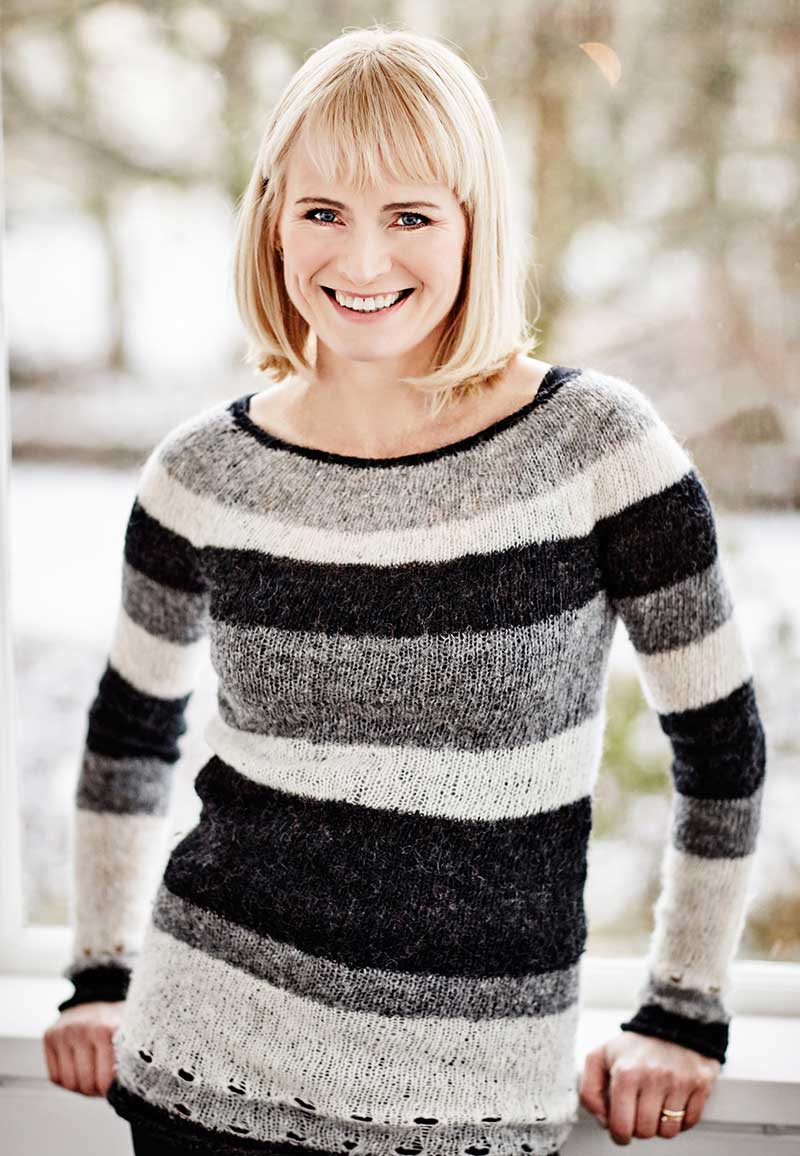
Alda Sigmundsdóttir was born in Iceland, raised in Canada, and has lived in Germany, Cyprus and the United Kingdom. She is the author of books on Icelandic culture, language, history, folklore and travel, as well as a memoir, Daughter. A former professional translator from Icelandic, she has written extensively about the country for the international press and lectured on it widely. Her weekly newsletter, Letter from Iceland, is read around the world.
Alda is active on social media, and may be found on Facebook and Instagram.
Our other books
The Shape of Silence is far from being Alda’s only book. She has written numerous titles about Iceland, the Icelanders, and Icelandic culture and affairs, as well as a memoir, Daughter. Click the button to see her selection of books, Little and otherwise.